** Extreme-slope crossover networks **
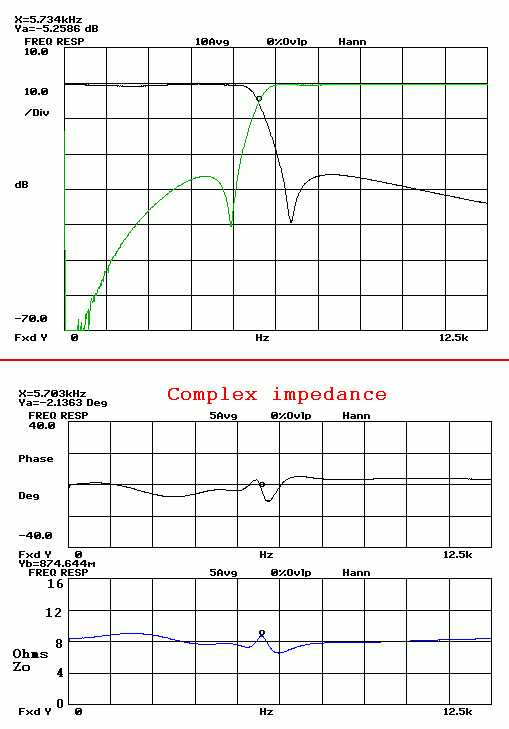
Extreme-slope networks separate the sound into frequency bands appropriate to each of the drivers (woofer, squawker or tweeter) and sends them ONLY to that driver. There is only a very small overlap where two drivers are sounding together and can interact with each other. Eliminating driver interaction eliminates the need for "time alignment" resulting in a much wider sweet spot, a noticeably better stereo image and a smoother frequency response throughout the room.
The advantages of extreme-slope networks over conventional gentle-slope networks:
-
Lower distortion: -
Better stereo image: -
Better frequency response:
An article describing crossover networks similar to those shown below having slopes on the order of 120 dB / octave in a Belle Klipsch is available. The article explains their benefits in more detail. The article also investigates such factors as filter ringing, group delay, driver interaction and time alignment. The article may be downloaded here.
* Extreme-slope Woofer / squawker networks *
For the Belle Klipsch or La Scala
 Enlarge
Estimate shipping cost
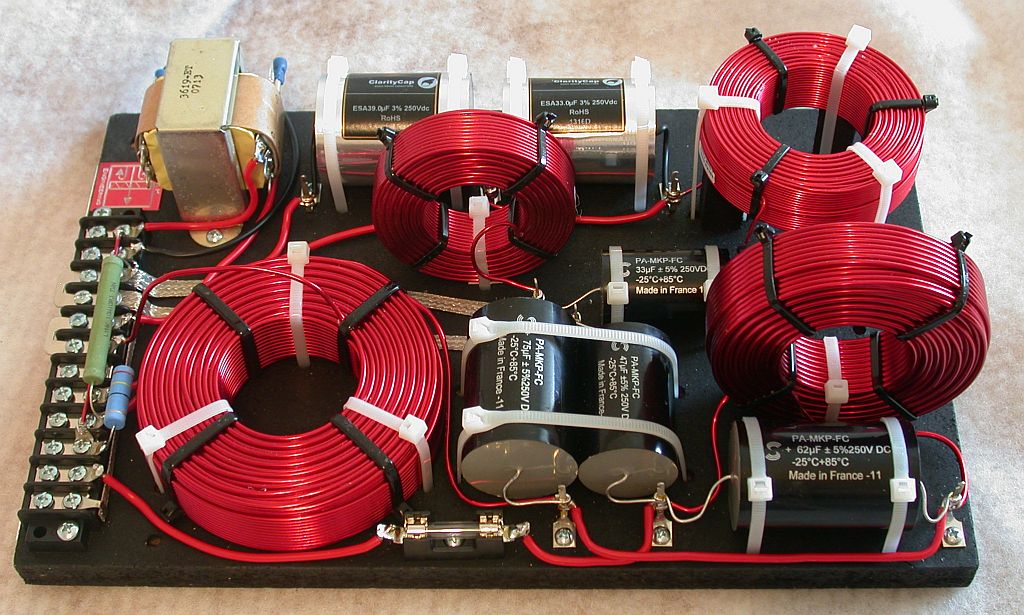
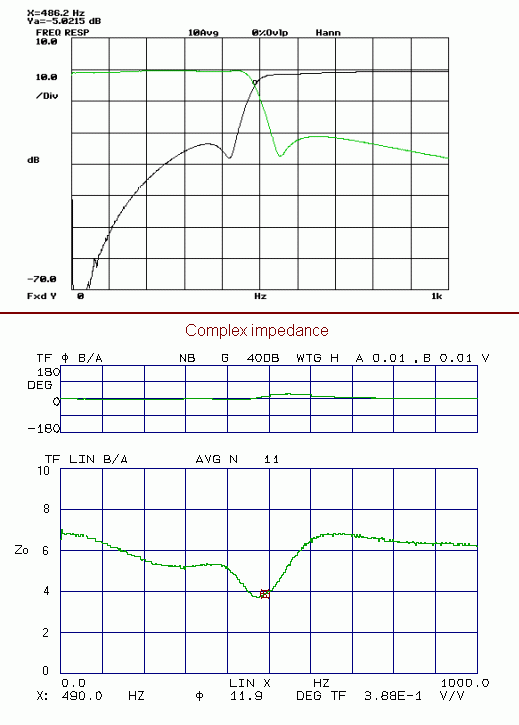
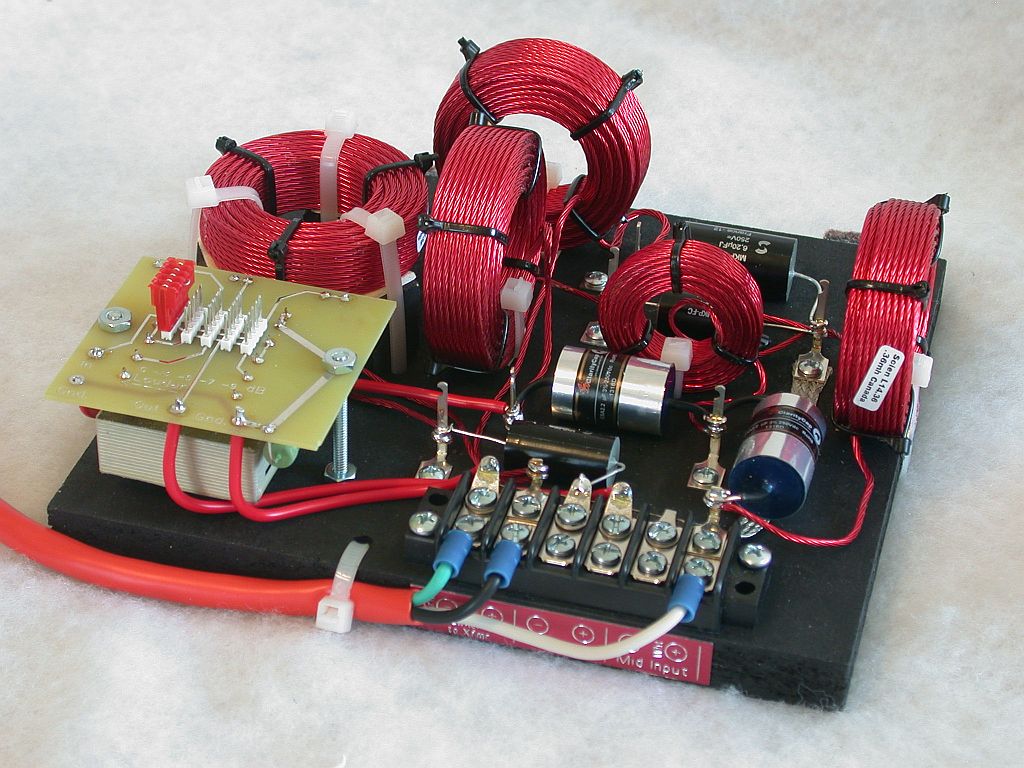
Crossover networks designed for the Belle Klipsch or Klipsch La Scala woofers having extremely sharp slopes which reach 20 dB or greater attenuation very close to the crossover frequency are available at frequencies of 500, 600 or 700Hz. A network at 400 Hz (ES400) has been developed in two sections (half on either side of the squawker horn) for use specifically in the Klipchorn. These designs virtually eliminate interaction between drivers which cause response peaks and dips throughout the listening area.
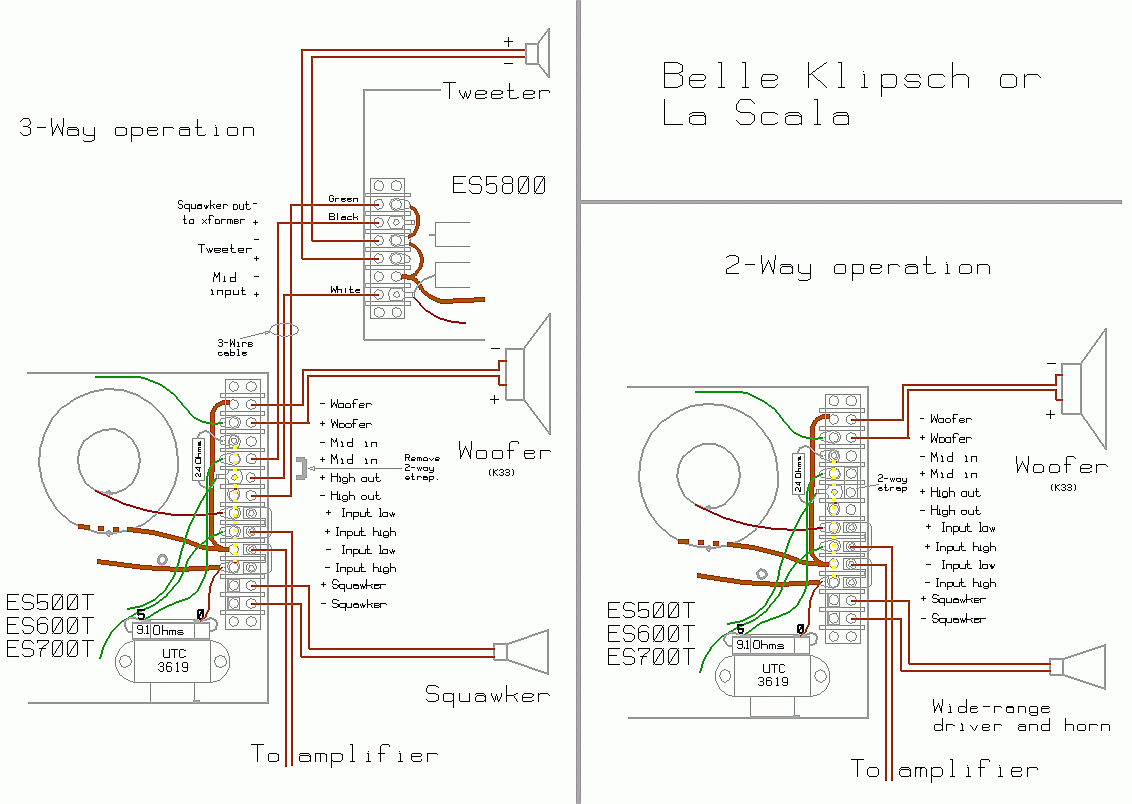
Removable straps are provided to use the autotransformer in a 2-way system or from an external tweeter / squawker crossover in a 3-way system (ES5800 or AP15-6000).
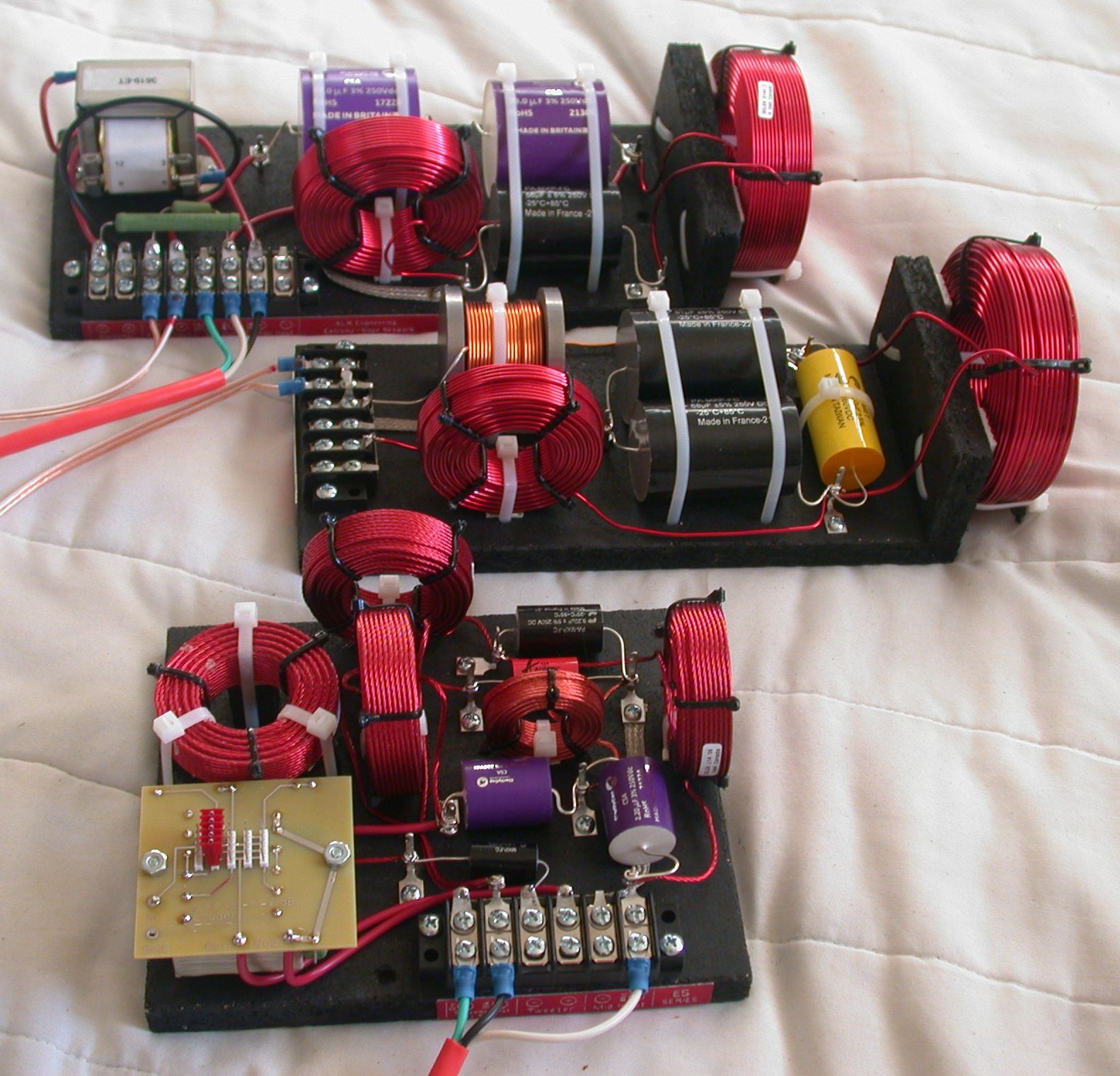
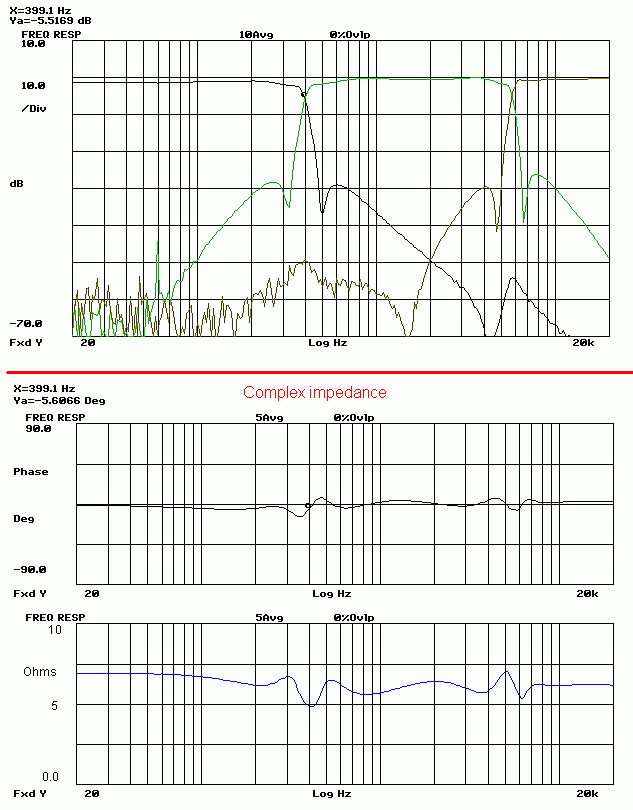
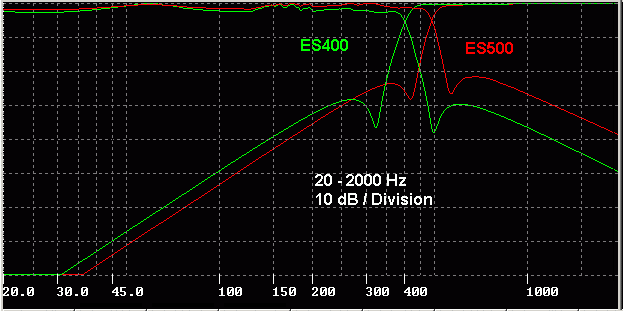
The extreme-slope network for the Klipschorn is a combination of the ES400 and the ES5800 networks packaged to fit on either side of the squawker horn inside the upper compartment of the Klipschorn. A direct comparison of computed response of the ES400 and ES500 networks. The ES400 has deeper ultimate rejection than the ES500 due to reduced slopes. The ES500 has slightly reduced loss through the woofer filter. The woofer response looks a bit rough as curve-fit data take from a real K33 driver was used in the computer model.
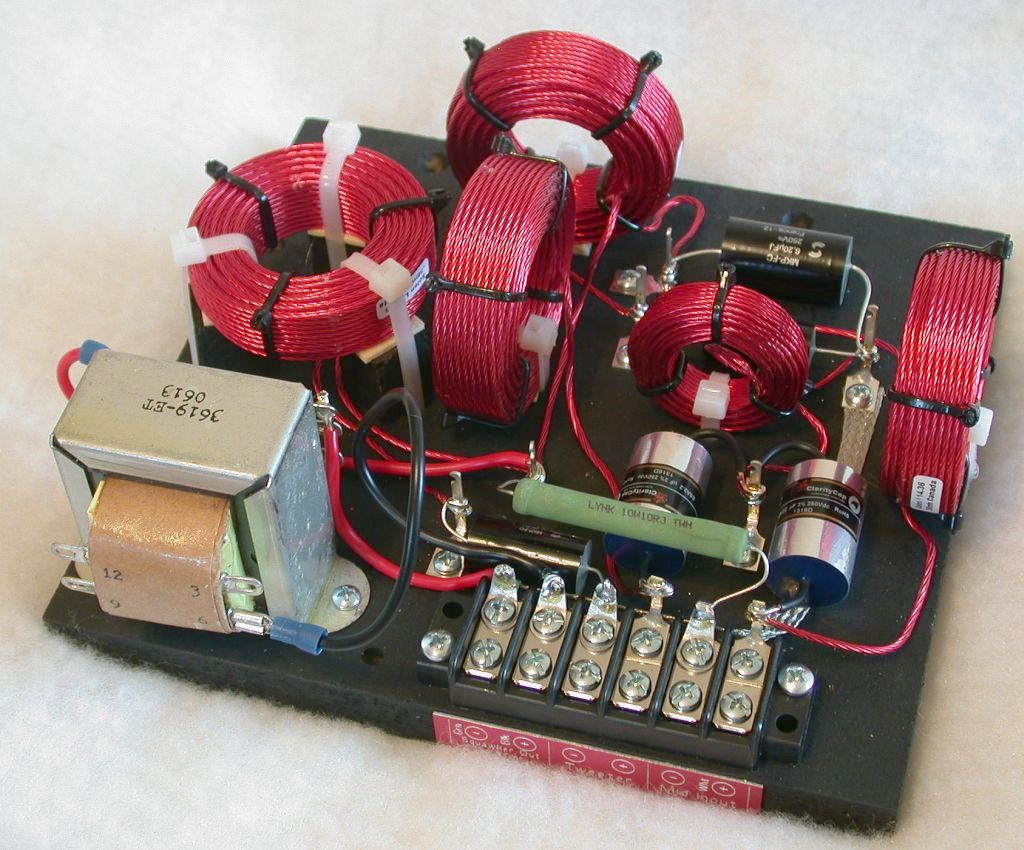
A version of these networks is available for use in bi-amp systems. This version is equipped with the 3619-ET transformer to attenuate the mid-range driver rather then the tweeter. It is designated ES5800T.
For more information on bi-amping, look here.
Squawker / tweeter networks at 4000, 7500 and 8500 Hz for use in 3-way systems are also available. The 5800 Hz crossover is the recommended frequency for most applications. All versions uses ClarityCaps in the signal path to the tweeter EXCEPT the ES7500. Solen astCaps are used as ClarityCaps are not available in the required value for that crossover frequency.
All have adjustable tweeter level settings of 0, -3, -5, -7 and -9 dB attenuation.
The bi-amp version allows mid-range setting from 3 to 18 dB in 1 dB steps.
 Enlarge
Estimate shipping cost
 Download ES400 + ES5800 users installation guide (Size: 2.2 Meg).
 Enlarge
 Enlarge
 Enlarge
Estimate shipping cost